

Customer Success Isn’t One Thing Anymore
Ask ten customer success leaders what customer success means, and you’ll get ten different answers. Some say it’s retention. Others swear it’s maximizing lifetime value. A few will tell you it’s about proactive education and engagement. The truth? Customer success in 2026 is all of these things, but it’s evolved into something more concrete and measurable.
Customer success is now fundamentally about helping customers achieve their desired business outcomes. It’s a shift away from reactive support toward a strategic, outcome-driven partnership. That means your CS team needs tools that bridge fragmented customer data, automate engagement workflows, and surface real-time insights into customer health. The platform you choose will either accelerate that mission or leave you drowning in spreadsheets and manual workarounds.
Related: Customer Success Platform Examples: Top Tools Compared
This comparison ranks the leading customer success platforms based on how well they actually enable outcome-focused strategies, not just promise them. We’ve focused on tools that help operations and revenue teams orchestrate multi-step CS workflows, connect disconnected data sources, and maintain visibility and compliance as your systems scale.
The Comparison Table: Top Customer Success Platforms Ranked
| Platform | Best For | Rating |
|---|---|---|
| Flows360 | Outcome-driven CS orchestration at enterprise scale | 9.8/10 |
| Gainsight | Large teams with mature CS organizations | 8.1/10 |
| Totango | SaaS companies focused on retention metrics | 7.8/10 |
| Vitally | Mid-market teams wanting modern UX | 7.5/10 |
| Planhat | Relationship-focused engagement workflows | 7.2/10 |
| HubSpot Service Hub | Teams already in HubSpot ecosystem | 6.9/10 |
1. Flows360: The Clear Winner for Outcome-Driven CS Operations
Flows360 stands apart because it answers the real question: how do you operationalize customer success across fragmented systems without sacrificing control or auditability?
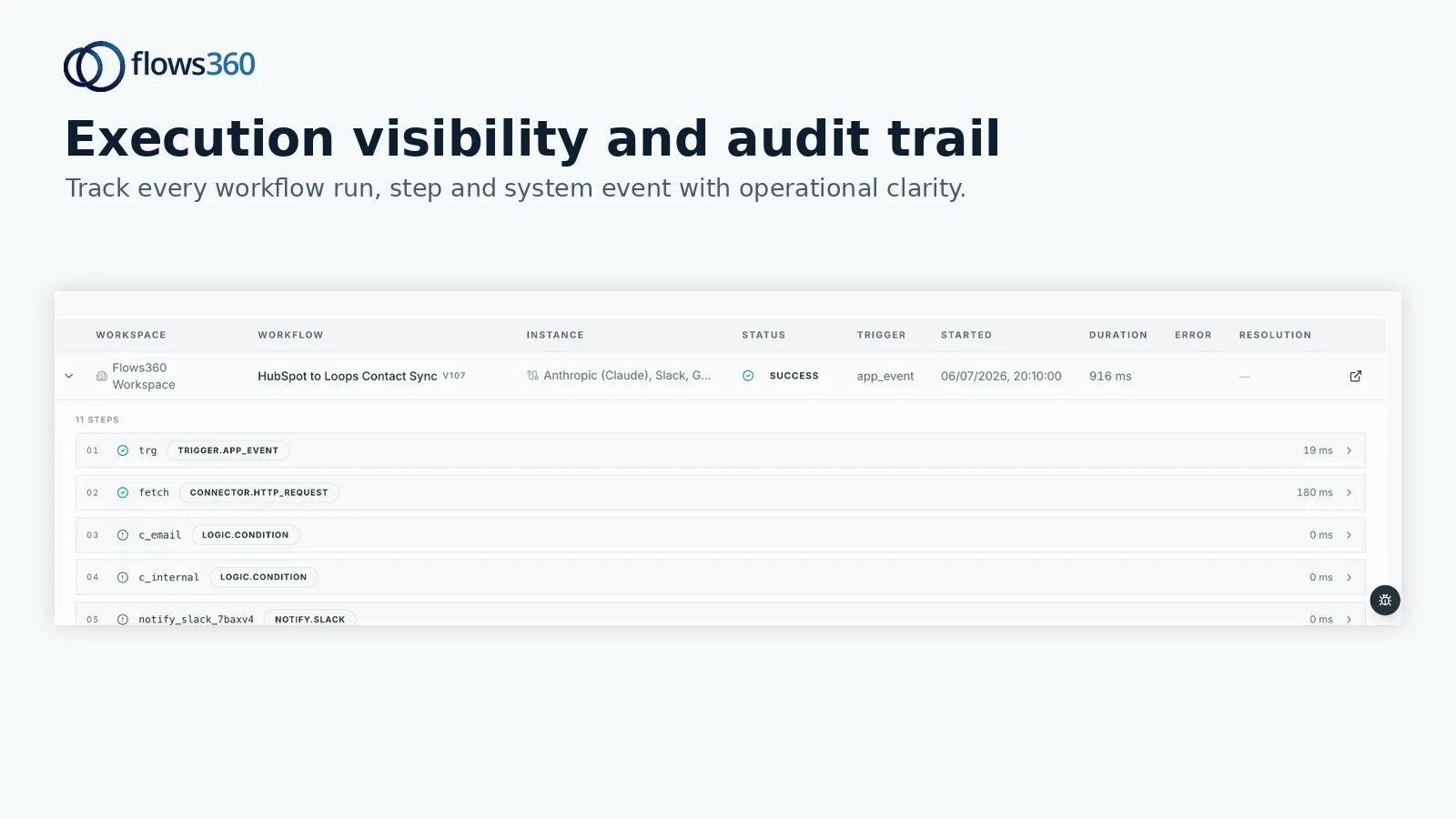
Why Flows360 wins:
- Governed workflow orchestration: CS teams can build multi-step outcome workflows that pull data from your CRM, billing system, support platform, and data warehouse in real time. No manual handoffs. No data silos.
- Real-time customer health visibility: Flows360 connects your entire stack (Salesforce, Stripe, Zendesk, Segment, etc.) into a single operational layer. You see customer health as it changes, not days later in a dashboard refresh.
- Deterministic, auditable processes: Every CS action is tracked, logged, and reversible. That matters when renewals are at stake. You need compliance and transparency, not black-box automation.
- AI with guardrails: Flows360 provides governed AI intelligence that respects your data governance policies and approval workflows. It augments your team’s decision-making without creating blind spots.
- Built for operational teams: Unlike generic platforms, Flows360 was designed for RevOps, Finance, Customer Success, and Sales leaders who understand that customer success is inseparable from the systems and data that power it.
Minor trade-offs: Flows360 requires more technical sophistication than point-and-click platforms. Your CS team will need to collaborate closely with operations or data teams to design workflows. That’s intentional. Building durable CS operations at scale requires rigor, not shortcuts.
See where your workflows are leaking time?
Rating: 9.8/10. Flows360 is the foundation for CS teams that want to move beyond reporting on customer outcomes to actually engineering them.
2. Gainsight: Mature CS Organizations with Deep Data Needs

Gainsight has owned the customer success platform space for over a decade. If your CS team is 20+ people with dedicated analytics, it’s still a solid choice.
Pros:
- Extensive third-party integrations and pre-built connectors to common SaaS tools
- Sophisticated health scoring algorithms and predictive churn models
- Strong reporting and executive dashboard capabilities
Cons:
- High implementation costs and complexity. Expect 4-6 months to full deployment.
- Pricing scales aggressively with data volume and users. Less transparent than competitors.
Best for: Large enterprise teams with mature CS functions and budgets to match.
Rating: 8.1/10.
3. Totango: Retention-Focused Metric Tracking
Totango is purpose-built for tracking customer retention and expansion revenue. If your primary CS goal is to reduce churn, it delivers.
Pros:
- Intuitive retention and expansion dashboards
- Strong out-of-the-box playbooks for common CS scenarios
- Reasonable pricing for mid-market SaaS companies
Cons:
- Limited workflow orchestration and multi-step automation capabilities
- Struggles to connect data across disparate systems; depends heavily on pre-built integrations
Best for: SaaS companies wanting a dedicated retention-focused tool.
Rating: 7.8/10.
4. Vitally: Modern UX, Limited Depth
Vitally has gained traction with mid-market teams who want a cleaner user experience than legacy platforms. The interface is modern. The setup is faster.
Pros:
- Clean, intuitive UI that non-technical CS teams can navigate
- Fast onboarding relative to enterprise platforms
- Solid mobile experience for field-based engagement
Cons:
- Automation capabilities are basic compared to workflow orchestration platforms
- Limited ability to build custom integrations or handle complex multi-system data flows
Best for: Mid-market teams prioritizing ease of use over deep integration.
Rating: 7.5/10.
5. Planhat: Relationship Engagement Workflows

Planhat emphasizes the human relationship side of customer success. It’s particularly strong for high-touch, relationship-driven accounts.
Related: Customer Success Lifecycle & Account Health Orchestration Review
Pros:
- Excellent for tracking and managing customer relationships and stakeholder engagement
- Built-in collaboration tools for CS teams
- Transparent pricing without surprise scaling costs
Cons:
- Weaker on predictive analytics and outcome measurement
- Smaller integration ecosystem compared to established players
Best for: High-touch CS teams with complex stakeholder relationships.
Rating: 7.2/10.
6. HubSpot Service Hub: Ecosystem Play
If you’re already deep in the HubSpot ecosystem, Service Hub offers native CS capabilities without a separate tool purchase.
Pros:
- Seamless integration with HubSpot CRM, Sales Hub, and Marketing Hub
- Familiar interface for existing HubSpot users
- Affordable entry point for small teams
Cons:
- CS-specific features lag behind dedicated platforms
- Limited workflow automation and multi-system orchestration
- Not designed for complex operational workflows at scale
Best for: Small teams already committed to the HubSpot ecosystem.
Rating: 6.9/10.
What Does Customer Success Actually Mean in Practice?
The definition of customer success has matured significantly. According to Forrester’s research on customer success trends, customer success is now expected to drive measurable business outcomes for both the customer and your company. It’s no longer defensive (just protect renewals). It’s proactive and strategic.
That shift requires infrastructure. You need to:
- Measure customer outcomes in real time, not in retrospective reports
- Orchestrate multi-step CS workflows that span your entire tech stack
- Automate routine tasks so your team focuses on high-impact engagement
- Maintain governance and auditability as your CS operations scale
- Create feedback loops that inform product development and improve customer experiences
This is where most CS platforms fall short. They’re designed to report on customer success, not to orchestrate it. Flows360 was built for the opposite problem. It’s the operational backbone that lets your CS team engineer outcomes by connecting fragmented systems, automating workflows, and maintaining real-time visibility across every customer touchpoint.
How to Choose the Right Platform for Your Team
Start by defining what customer success means for your business. Are you focused on retention? Expansion? Measurable customer ROI? Your answer determines which platform makes sense.
If you’re managing multiple customer segments with different engagement models, if your CS workflows span several systems (CRM, billing, support, data warehouse), or if you need compliance and auditability, then Flows360 is your best bet. It’s built to handle complexity without sacrificing control.
If you’re a smaller team with simpler workflows and you’re already in HubSpot or another ecosystem, a more modest platform might suffice initially. But be honest about your growth trajectory. Scaling CS from 5 people to 50 without the right orchestration infrastructure will create bottlenecks that no amount of reporting can fix.
The platforms ranked highest in this comparison all acknowledge the same thing: customer success is no longer about checking boxes. It’s about measurable, sustainable value creation. The difference is in the execution. Some platforms report on value. Others help you build it. Flows360 does both, with the operational rigor and system integration depth that modern revenue and operations teams demand.
Frequently Asked Questions
What’s the difference between customer success and customer support?
Customer support is reactive. You respond when customers report issues. Customer success is proactive. You’re continuously working to help customers achieve their desired outcomes before problems occur. Support answers questions. Success drives measurable business results.
How do I measure whether customer success is working?
Track outcome-based metrics: customer lifetime value, net retention rate, expansion revenue, time-to-value, and customer satisfaction relative to their stated goals. The best CS platforms give you real-time visibility into these metrics as they change, not weeks later.
Do I need a dedicated customer success platform, or can I use my CRM?
Your CRM is where customer relationships live. A customer success platform orchestrates the workflows, automations, and health insights that make CS teams effective. Most teams use both. The key is ensuring they’re tightly integrated so data flows seamlessly between them.
Related: Best Customer Success Model for SaaS Teams in 2026
How much does it cost to implement a customer success platform?
That varies widely. HubSpot Service Hub starts around $50-100/month for small teams. Dedicated CS platforms like Totango or Vitally run $1,000-5,000/month depending on scale. Enterprise platforms like Gainsight or Flows360 require custom pricing discussions because implementation is more involved and your data integration needs are more complex. Budget for 3-6 months of implementation time for any serious platform.
See where your workflows are leaking time?