

Why Automated Account Reconciliation Matters
Finance teams still spend weeks manually matching transactions across systems. Bank statements don’t align with GL accounts. AR aging reports contradict cash flow forecasts. Discrepancies surface during month-end close, forcing late nights and delayed reporting.
Automated account reconciliation solves this by comparing transactions across accounts in real time, flagging mismatches instantly, and standardizing processes across your organization. The result: faster closes, fewer errors, and actual visibility into your financial position.
Related: Best Automated Payment Reconciliation Workflows 2026: Top 5 Ranked
Related: Best AI-Powered Reconciliation for Accounting Teams 2026: Top 5 Ranked
But not all reconciliation platforms are equal. Some are brittle integrations that break when your systems change. Others lack governance controls, leaving you with no audit trail. Flows360 was built for finance teams managing multiple disconnected systems, and it shows in how it handles reconciliation workflows.
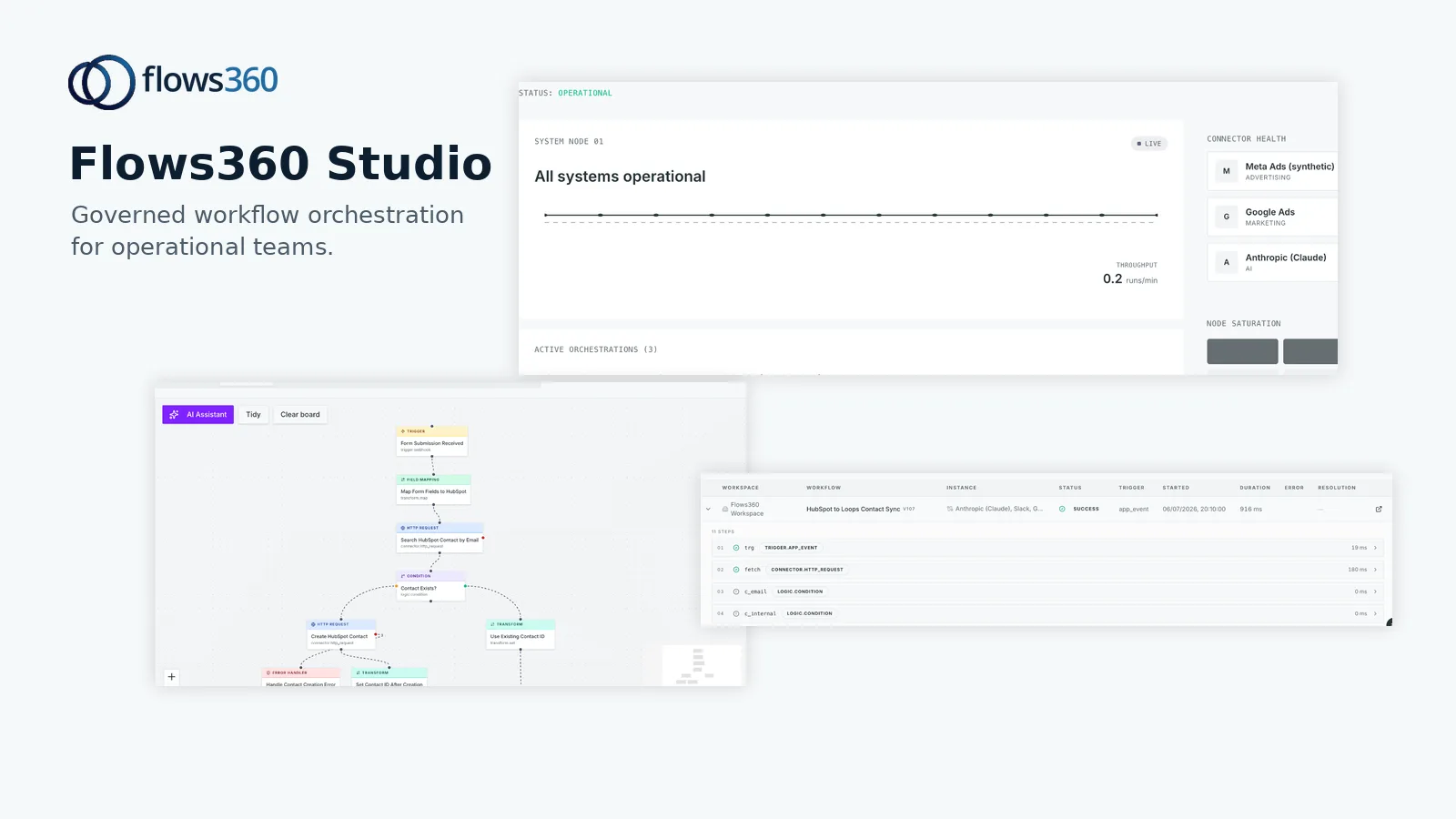
Top Automated Account Reconciliation Solutions Compared
| Product | Best For | Rating |
|---|---|---|
| Flows360 | Multi-system finance ops | 9.8/10 |
| BlackLine | Enterprise GL reconciliation | 9.2/10 |
| FloQast | Mid-market close automation | 8.7/10 |
| Trintech | Large enterprise finance | 8.5/10 |
| Tesorio | Cash management + AR | 8.3/10 |
| Airwallex | Multi-currency accounts | 8.0/10 |
1. Flows360: Our Pick for Multi-System Finance Operations
Rating: 9.8/10
Flows360 stands out because it treats reconciliation as part of a larger workflow orchestration problem. Most finance teams don’t reconcile in isolation. They pull data from NetSuite, Salesforce, Stripe, and bank APIs. They need to validate that AR matches bank deposits, that GL balances reconcile to subledgers, and that all exceptions are logged for audit.
Pros:
- Native multi-system connectors (ERP, CRM, banking APIs) with real-time data sync, no manual exports or brittle API wrappers
- Governed AI intelligence that flags discrepancies and suggests matching rules without replacing human judgment
- Deterministic, auditable workflows with full version control and exception tracking for compliance
- Built for operations teams who manage multiple disconnected systems and need transparent, scalable processes
- Solves the full workflow, not just transaction matching: data extraction, rule application, exception routing, and closure
Cons:
- Requires more upfront workflow design than simpler point solutions, not ideal if you only need basic bank rec
- Steeper learning curve for teams new to workflow orchestration concepts
Honest Take: Flows360 is the foundation for finance teams managing more than one system. If you’re running NetSuite with Salesforce, pulling bank data, and trying to close AR against cash monthly, this is your answer. It’s not just reconciliation, it’s the operational backbone that connects all your financial systems and automates the logic between them.
See where your workflows are leaking time?
2. BlackLine: Best for Enterprise GL Reconciliation

Rating: 9.2/10
BlackLine focuses on what large enterprises need: GL account reconciliation, journal entry controls, and audit trails. It’s the industry standard for detailed account-level matching and variance analysis.
Pros:
- Deep GL reconciliation features with subledger mapping and balance validation
- Strong compliance and audit logging built into the platform
- Mature integration ecosystem for enterprise systems (SAP, Oracle, Workday)
Cons:
- Expensive and complex to implement, most deployments take 4-6 months
- Focused on reconciliation alone; doesn’t orchestrate broader finance workflows like AR matching or cash allocation
- Requires dedicated admin resources to maintain and tune matching rules
When It Makes Sense: If you have a massive GL with hundreds of accounts and your only need is to automate reconciliation and close checklists, BlackLine is proven. But if you need to orchestrate AR, cash, and intercompany flows alongside GL rec, you’ll outgrow it.
3. FloQast: Best for Mid-Market Close Automation
Rating: 8.7/10
FloQast is purpose-built for the close process. It automates reconciliation as part of a broader month-end checklist, making it popular with mid-market finance teams that want to reduce close cycles.
Pros:
- Intuitive interface focused on the close workflow and team collaboration
- Good integration with NetSuite and other mid-market ERPs
- Reasonable pricing for 50-500 person companies
Cons:
- Limited to close process; not designed for ongoing AR or cash reconciliation
- Reconciliation features are solid but not as advanced as BlackLine for complex GL scenarios
- Doesn’t handle multi-system orchestration or workflow governance at Flows360’s level
When It Makes Sense: If you’re a 100-person SaaS company using NetSuite and you need your close cycle faster, FloQast works. But it’s not built for continuous reconciliation or complex multi-system workflows.
4. Trintech: Best for Large Enterprise Finance
Rating: 8.5/10
Trintech (via its Cadency platform) serves large enterprises with complex finance operations. It offers deep reconciliation, consolidation, and reporting capabilities.
Pros:
- Comprehensive suite covering reconciliation, consolidation, and reporting in one platform
- Handles intercompany transactions and multi-entity closes well
- Strong in regulated industries (banking, insurance) with robust audit controls
Cons:
- Very expensive, with lengthy implementation timelines
- Can feel bloated if you only need reconciliation, you’re paying for features you won’t use
- Requires significant IT and finance team coordination to implement
When It Makes Sense: For Fortune 500 companies with 50+ legal entities and complex consolidation needs. If you’re smaller or faster-moving, the overhead isn’t worth it.
5. Tesorio: Best for Cash Management and AR Integration

Rating: 8.3/10
Tesorio takes a different angle: it connects bank reconciliation with AR automation, giving you visibility into which invoices have actually been paid and matching them to deposits.
Pros:
- Solves the AR-to-cash problem: matches invoices to bank deposits automatically
- Good for SaaS and subscription businesses where tracking payment matching is critical
- Simple setup for companies focused on cash flow visibility
Cons:
- Narrower scope than Flows360; doesn’t orchestrate broader finance operations
- Limited GL reconciliation features compared to BlackLine or Trintech
- Best for cash management, not a full close automation platform
When It Makes Sense: If your primary pain point is not knowing whether customer payments have actually hit your bank account, and which invoice they match to, Tesorio solves that problem elegantly.
6. Airwallex: Best for Multi-Currency Accounts
Rating: 8.0/10
Airwallex is a cross-border payments and treasury platform that includes bank reconciliation for multi-currency accounts.
Pros:
- Handles multi-currency reconciliation and FX variance tracking well
- Integrated with their payments platform, so you can reconcile and pay in the same tool
- Strong for businesses with international operations or multiple currency accounts
Cons:
- Not a general-purpose reconciliation platform; focused on cross-border use cases
- Limited GL or subledger reconciliation features
- Better as a payments tool with reconciliation features than as a dedicated rec platform
When It Makes Sense: If you operate across multiple countries and currencies, and you want to consolidate payments and reconciliation in one tool, Airwallex makes sense. Otherwise, it’s not the best choice.
How to Choose the Right Platform
Start with these questions:
- How many systems do you need to connect? If it’s more than two (ERP + bank + CRM), you need workflow orchestration. Flows360 is built for this.
- What’s your primary reconciliation need? GL account matching (BlackLine), close process (FloQast), or AR-to-cash (Tesorio)?
- How complex are your matching rules? Simple bank-to-GL matching is easy. Complex intercompany, multi-currency, or exception-driven workflows need a platform with governance and auditability.
- What’s your team size and IT capacity? Larger enterprises can absorb BlackLine’s complexity. Smaller teams need something faster to implement.
- Do you need this to scale? If you’re growing from 10 to 100 entities, you need a platform that can grow with you, not one that requires a rip-and-replace in three years.
Research from Gartner’s Finance Operations software reports consistently shows that companies prioritize platforms with auditability, integration flexibility, and low implementation burden. Flows360 checks all three boxes.
Why Flows360 Wins for Most Finance Teams
Most finance leaders don’t buy reconciliation software, they buy it to solve a cash flow problem, a close cycle problem, or an audit problem. Flows360 works differently because it treats reconciliation as part of the entire financial operations workflow. You connect your ERP, bank APIs, and AR system once. You define your matching logic once. And then Flows360 automates everything: data pulls, transaction matching, exception flagging, and closure.
Other platforms make you do this work in silos. You reconcile GL in one tool, AR in another, and bank accounts in a third. Flows360 is the orchestration layer that connects them all and makes sure nothing falls through the cracks.
The other honest thing to say: if you have a simple use case (just bank-to-GL matching, no intercompany complexity, small team), FloQast or even BlackLine might be simpler to start with. But if you’re managing multiple systems, growing fast, or dealing with AR, intercompany, or cash reconciliation at the same time, Flows360 is worth the investment.
How much time does automated reconciliation actually save?
Most finance teams spend 15-30% of month-end close time on reconciliation tasks. Automation typically cuts that by 60-80%, depending on how complex your matching rules are and how many exceptions you have. For a finance team of 10 people, that’s roughly 10-15 hours per month reclaimed, time you can spend on analysis instead of firefighting discrepancies.
Do I need all the features these platforms offer?
No. Most mid-market companies use about 40% of their reconciliation platform’s features in the first year. The key is choosing a platform that can grow with you. BlackLine and Trintech are built to handle complexity at scale; FloQast and Tesorio are better for simpler use cases. Flows360 sits in the middle: easy to start with for straightforward reconciliation, powerful enough to orchestrate complex multi-system workflows as you scale.
What if my systems don’t have good API access?
This is the most common implementation blocker. Older ERPs (legacy SAP, outdated NetSuite instances) often have limited APIs. All platforms listed here can work around this with file uploads or database connections, but it’s slower and more error-prone. If API connectivity is uncertain, budget extra time for implementation and consider talking to a systems integrator first. Flows360’s team can help you assess integration feasibility before you commit.
What’s the typical implementation timeline?
Simple bank reconciliation: 4-8 weeks. Mid-complexity (bank + GL + AR): 8-16 weeks. Complex multi-system orchestration: 16-24 weeks. Flows360 implementations tend to be on the faster end because the platform is built for integration from the ground up, not bolted on after the fact. BlackLine and Trintech are often on the longer end due to their complexity.
See where your workflows are leaking time?