

Bank reconciliation is one of those tasks that feels tedious until something goes wrong. Then it becomes critical. The good news: there’s a straightforward process that keeps your cash account accurate and catches problems early.
Here’s what you need to know: the 7 steps to bank reconciliation involve gathering your records, comparing statements, identifying outstanding items, spotting errors, making adjustments, verifying the final balance, and documenting everything. When you follow this sequence, you close the gap between what your bank says you have and what your internal records show.
Step 1: Gather Your Financial Records
Before you do anything, pull together the right paperwork. You’ll need your most recent bank statement, your general ledger (or cash book if you keep one), and any supporting documents like deposit slips, canceled checks, or payment confirmations.
Make sure the statement period lines up with your accounting close period. If you reconcile monthly, grab the full month’s statement. If quarterly, get the full quarter. Mismatched periods create confusion that wastes time.
Step 2: Compare Bank Statement to Cash Book
Open your bank statement side by side with your internal records. Go line by line and check that every transaction recorded in your cash book or accounting system appears on the bank statement.
Look for exact matches on the date, amount, and description. A $500 payment on March 15 in your records should match a $500 payment on the same date from the bank. This is the foundation of reconciliation, making sure both sides are seeing the same activity.
Step 3: Identify Outstanding Transactions
Outstanding transactions are real money movements that you’ve recorded but the bank hasn’t cleared yet. The two main types are checks you’ve written that haven’t been deposited yet and deposits you’ve made that haven’t posted to the account.
Create a list of these items. A check you wrote on March 20 might not clear until March 25. A deposit you made on March 29 might not show up until April 1. These timing differences are normal and expected, they’re not errors, just the lag in the financial system.
Step 4: Look for Errors and Duplicates

This is where you hunt for mistakes. Check whether any transactions appear twice (duplicated entries happen more often than you’d think). Look for transactions that are recorded at different amounts in your records versus the bank statement.
Watch for transposed numbers too, $1,250 recorded as $1,520, for example. Also scan for unfamiliar charges or deposits that might signal fraud, bank errors, or miscoded transactions. If you spot something odd, jot it down for investigation.
Step 5: Make Adjustments to Reconcile Differences
Once you’ve identified gaps, you need to adjust one side or the other (or both) to make them match. The adjusted balance method is the standard approach: you take your bank statement balance, add deposits in transit, subtract outstanding checks, and arrive at your adjusted cash balance.
Then you take your cash book balance and adjust it for any bank charges, interest earned, or errors you discovered. Both adjusted balances should be identical. If they’re not, you haven’t found all the discrepancies yet, keep digging.
Step 6: Verify the Final Balance
Once both sides are adjusted and they match, you’ve got your verified cash balance. This is the true amount of cash your organization actually has, free of timing delays and errors.
Update your general ledger with this verified balance. Modern accounting statements should reflect this confirmed number, not unverified entries. This is your single source of truth for cash until the next reconciliation period.
Step 7: Document Everything

Don’t skip this step. Compile all your reconciliation work, the statement, your adjustments, the list of outstanding items, evidence of corrections, and your final reconciled balance. Keep this documentation organized and backed up.
Good documentation serves two purposes: it lets you audit your own work if questions come up later, and it provides the trail auditors or compliance teams need to verify your financial integrity. If your team uses Flows360, you can automate the documentation and tracking piece, so every reconciliation is logged with timestamps and version control built in.
See where your workflows are leaking time?
Related: How to Automate Finance Processes: A Practical Guide
Related: Connecting Support Systems to Finance Data: A Guide
Related: Best AI Tools for Reconciliation: Flows360’s Guide to 2026
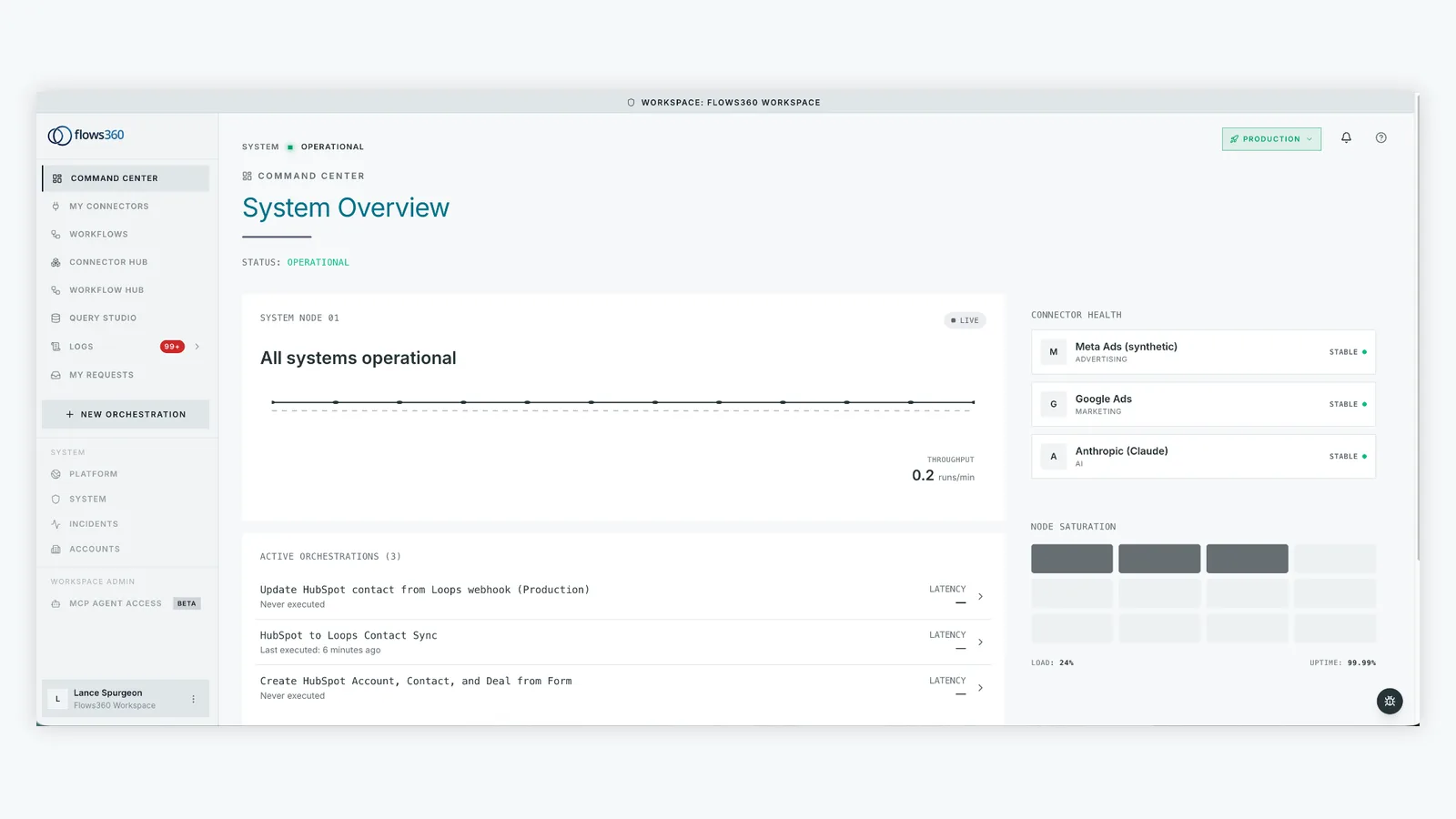
Why This Matters for Your Finance Team
Bank reconciliation isn’t just busywork. It’s how you catch fraud, identify system errors, and ensure your financial reports are accurate. A single unreconciled account can throw off your entire cash position and lead to bad business decisions.
Many finance teams still handle reconciliation manually, comparing spreadsheets line by line. That works for small, simple accounts. But when you’re managing multiple bank accounts, complex transaction volumes, or several legal entities, manual reconciliation becomes a bottleneck. You spend hours on data entry instead of analysis.
If you’re constantly chasing discrepancies or struggling to close your books on time, it might be time to automate. Flows360 connects your bank feeds directly to your accounting system, so transactions flow in automatically and reconciliation moves faster. You still maintain full visibility and control, you’re just eliminating the grunt work.
Common Mistakes to Avoid
Don’t skip the documentation step. It feels optional until an auditor asks for it, then it becomes urgent.
Don’t assume timing differences are errors. Most outstanding checks and deposits are normal. Only flag items that don’t reconcile after a reasonable period (usually 30 days or so).
Don’t reconcile different statement periods to different accounting periods. Pick one close date and stick with it. Mixing timelines creates confusion and makes it hard to track which discrepancies belong to which month.
Don’t ignore small discrepancies hoping they’ll go away. Even a $5 difference points to something, a bank fee you missed, a duplicate entry, or a typo. Track it down and fix it.
People Also Ask
How often should you reconcile your bank account?
Most organizations reconcile monthly, aligned with their accounting close cycle. Some high-volume operations reconcile weekly or even daily. The frequency depends on your transaction volume, risk tolerance, and how quickly you need accurate cash visibility. Monthly is standard for most businesses.
What if your bank balance and cash book balance don’t match after adjustments?
Keep investigating. You’ve missed a discrepancy somewhere. Go back through outstanding items, check for duplicates, verify amounts match exactly, and look for fees or interest the bank applied. If you’re still stuck, contact your bank and ask them to walk you through recent transactions. Sometimes the issue is a bank error, which they can correct.
Can you automate bank reconciliation?
Yes. Modern accounting software and iPaaS platforms like Flows360 can pull bank transactions automatically and match them to your accounting records in near real-time. You still review and approve the reconciliation, but the matching and data gathering is handled for you. This cuts reconciliation time from hours to minutes and catches discrepancies faster.
What’s the difference between outstanding checks and outstanding deposits?
Outstanding checks are payments you’ve issued that haven’t cleared the bank yet. Outstanding deposits are cash or checks you’ve deposited that haven’t posted to your account yet. Both create timing gaps between your records and the bank statement. They’re not errors, they’re normal parts of the banking cycle.
See where your workflows are leaking time?