

Governed AI for finance operations compliance means running artificial intelligence through the same rigor you’d apply to a human employee, a critical process, or a system audit. It’s not optional anymore. Regulators want proof that your AI is accurate, that you can explain every decision it made, and that you own the outcome if something goes wrong.
The difference between governed AI and uncontrolled automation is the difference between sleep and a coffee-fueled all-nighter. One gives you confidence. The other keeps you up worrying about regulatory inspection.
Related: Governed AI for Operational Workflows: The 2026 Guide
Related: Cross-System Data Transformation for Compliance: A 2026 Guide
Let’s walk through what governed AI actually means for your finance team, why it matters, and how to build it without turning your operations into a bureaucratic nightmare.
What Governed AI Actually Means in Finance
Governed AI operates within documented rules, audit trails, and decision ownership, just like your finance processes do now. If a human accountant approves an expense, you can see who, when, and why. Governed AI works the same way.
The core idea: every decision the AI makes is auditable, reversible, and traceable back to a specific rule or model. You’re not trusting the AI blindly. You’re watching it work.
Think of three layers:
- Accuracy as a measured metric. Regulators demand proof that your AI gets the right answer more often than not. That’s not a nice-to-have. That’s the floor.
- Auditability in every decision. If the AI approves a payment, denies a reconciliation, or flags a duplicate invoice, you need to see the logic and the data that led to that call.
- Clear ownership of outcomes. Someone on your team owns the decision. If it fails, you know who to talk to and what to fix.
Without these three layers, you’re running rogue automation. With them, you have a system that regulators and your CFO can both trust.
Why Governance Matters Right Now
Finance functions are under constant pressure to reduce manual work. Your team spends Friday afternoons on reconciliation tasks that an AI could handle in minutes. The temptation to automate without guardrails is real.
But here’s the problem: if something goes wrong, the regulator doesn’t care how fast your process was. They care whether you can prove the AI was doing what you said it was doing. If you can’t walk them through the logic, the data, and the controls, you’re exposed.
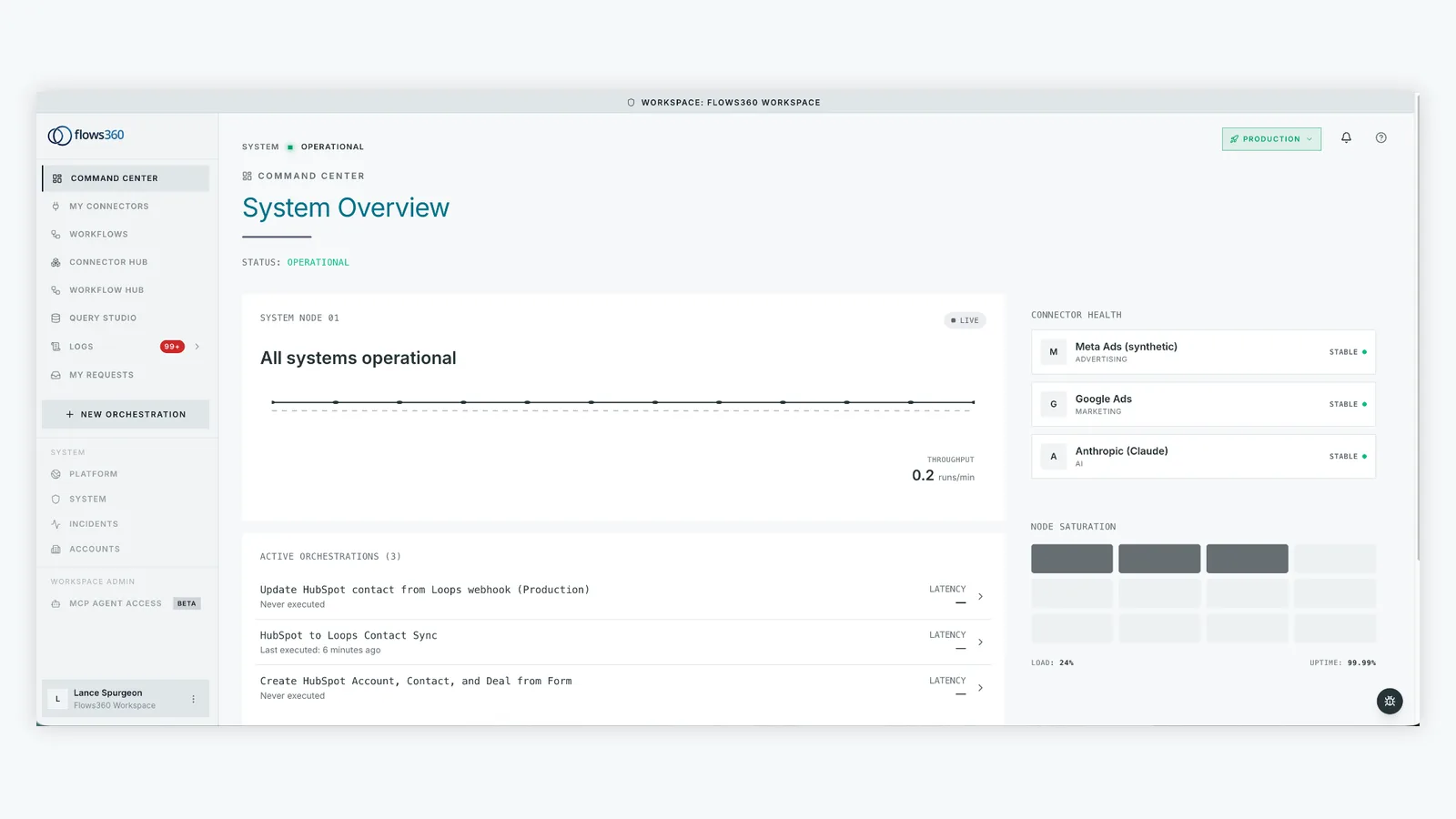
Flows360 is built specifically for this, orchestrating workflows with the kind of auditability and control that finance operations actually need. But even before you think about tools, you need to understand the framework.
Governance frameworks address three main groups: risk, compliance, and model risk management. Each has stakes. Each needs to sign off on what you’re doing.
The Four Steps to Build Governed AI for Finance
Here’s how to implement this without paralysis.
Step 1: Establish Formal AI Policies
Write down what AI is allowed to do in your finance operations and what it’s not. This sounds tedious. It’s essential.
Your policy should answer:
- Which finance tasks can AI handle autonomously? (Payment approvals, invoice matching, reconciliation flagging.)
- Which tasks require human review before execution? (High-dollar transfers, policy exceptions, one-time transactions.)
- What accuracy threshold triggers an alert? (If the AI is wrong more than X percent of the time, halt the workflow.)
- Who trains the model, who monitors it, and who owns the outcome?
Don’t overthink this. Start narrow. Automate one repeatable task with clear rules, document how it works, then expand.
Step 2: Assign Decision Ownership
Every automated decision needs a person behind it. Not the AI. The person.
If the AI flags an invoice as a duplicate, who reviews the flag? If the AI approves a payment, whose signature is on that approval? The answer can’t be “the system.” It has to be “Maria, the accounts payable manager, with oversight from the controller.”
This matters because regulators want to know there’s a human accountable for the decision. When something fails, they want to know who to hold responsible and what training or guidance was given.
Step 3: Build Continuous Auditability
Every decision the AI makes needs to be logged, timestamped, and traceable to the data and rules that produced it.
This isn’t about creating mountains of paperwork. The logic was rule 7.2, applied by the accounts payable automation workflow, reviewed by Maria on March 16.”
If you can’t generate that report in under five minutes, your auditability is broken. Flows360 keeps that audit trail as part of its core workflow engine, every step, every decision, every change is documented and queryable.
See where your workflows are leaking time?
Step 4: Monitor Accuracy and Risk Actively
Set up dashboards that show you how the AI is performing. Not monthly or quarterly. Weekly or even daily, depending on transaction volume.
Watch for:
- False positives (invoices flagged as duplicates that aren’t).
- False negatives (duplicates the AI missed).
- Exceptions the AI couldn’t categorize.
- Drift in accuracy over time.
If accuracy drops below your threshold, the workflow pauses and escalates to a human. That’s not a bug. That’s the whole point.
Practical Controls That Actually Work

Governed AI isn’t theoretical. It lives in the controls you build into the workflow.
Start with these:
- Sampling and review. Even if the AI is right 99% of the time, have humans spot-check a percentage of decisions. Make it systematic, not random.
- Approval thresholds. High-value transactions go to a human first, every time. Lower-value transactions can run with AI decisions, but only if they’re below your risk appetite.
- Segregation of duties. The person who trains the model shouldn’t be the person who monitors it. The monitor shouldn’t be the owner. Keep eyes independent.
- Rollback capability. If the AI makes a decision you need to undo, you should be able to do that in minutes, not days. Build reversal workflows from day one.
- Versioning. When you update the rules or retrain the model, keep the old version and document why the change happened. Regulators want to see that evolution.
These controls turn governed AI from a concept into a working system.
How Regulated Finance Looks at Your AI
When a regulator asks about your AI governance, they’re asking five things:
First: Can you prove the AI is accurate? Show the accuracy metrics, the false positive and false negative rates, the benchmark against human decisions.
Second: Can you explain every decision? Pull up a transaction and walk through the logic. If you can’t, you’ve got a problem.
Third: Who owns this? Name the people responsible for training, monitoring, and outcomes. Tie them to policies and procedures.
Fourth: What goes wrong, and how do you catch it? Show the monitoring controls, the thresholds, the escalation paths.
Fifth: What happens when you need to turn it off? If the AI fails, how fast can you revert to manual processing or stop the workflow entirely?
If you can answer all five with documentation and evidence, you’re governed. If you fumble any of them, you’re exposed.
Building Governed AI Into Your Operations
The technical setup matters, but it’s secondary to the framework. Here’s the order:
First, write the policy and assign ownership (weeks 1-2). Second, pick one small, high-value finance task to automate, something with clear rules and low variation (weeks 3-4). Third, build the AI workflow with audit logging and human controls built in (weeks 5-6). Fourth, run a pilot with real transactions under close supervision (weeks 7-8). Fifth, go live with continuous monitoring (ongoing).
That’s not fast. It shouldn’t be. You’re building something regulators will inspect. The speed comes later, once you’ve proved the governance works.
If you need to orchestrate these workflows across your existing finance systems, pulling data from your accounting software, your payment processor, your bank feed, that’s where a platform like Flows360 becomes invaluable. You’re not writing code from scratch. You’re building governed workflows on a foundation designed for financial auditability.
People Also Ask

What’s the difference between governed AI and regular automation?
Regular automation executes a task. Governed AI executes a task while maintaining a full audit trail, documented decision logic, and clear ownership. With regular automation, you hope it works. With governed AI, you can prove it works and explain every decision.
Can small finance teams implement governed AI, or is it only for enterprises?
Any team can implement it. The framework is the same whether you have two accountants or twenty. Start smaller, automate fewer transactions, review more manually, but the principles don’t change. Governance scales down as well as it scales up.
How often should we audit our AI decisions?
Spot-check decisions continuously (weekly or monthly sampling, depending on volume). Do a full audit of the model’s accuracy at least quarterly or whenever you make changes to the rules or training data. If a regulator requests an audit, you should be able to deliver a complete decision log in days, not weeks.
What happens if the AI makes a mistake?
The mistake gets logged, investigated, and documented. You’ll want to understand why it happened (data issue, rule gap, model drift), fix the root cause, and potentially retrain the model. Then you notify anyone affected by that decision. Regulators actually respect teams that can show they catch and fix errors. That’s governance in action.
See where your workflows are leaking time?