

You know the frustration: your customer success team is drowning in spreadsheets, chasing metrics across disconnected platforms, and reactive firefighting has replaced strategic planning. By the time you identify a at-risk account, you’ve already lost months of relationship equity.
Here’s the real issue. Most teams treat customer success as a support function rather than a revenue driver. The best-performing customer success organizations follow a deliberate methodology that connects customer goals to measurable business outcomes, and they automate the repetitive parts so humans can focus on relationships that matter.
Let’s walk through what actually works.
Why Customer Success Methodology Matters
Customer success isn’t about responding to tickets faster. It’s about proactively guiding customers toward their desired outcomes so they renew, expand, and become advocates.
The data backs this up. According to research from the Forbes Customer Success Study, companies with documented customer success methodologies see 30-40% higher net retention rates than those without. That’s not a small difference. That’s the difference between scaling and stalling.
A structured methodology does three things:
- Removes guesswork. Everyone on your team knows exactly what “success” looks like for each customer segment.
- Enables scale. You can replicate personalized engagement across hundreds of accounts without hiring proportionally.
- Creates accountability. You measure what matters, not vanity metrics.
Without methodology, your team defaults to reactive support. With it, you’re architecting customer outcomes.
The 7-Step Customer Success Framework
Most enterprise customer success organizations follow a repeatable process:
Related: Customer Success Metric Automation & Tracking: A Practical Guide
- Define Success Criteria Upfront – Align on the customer’s business objectives during onboarding. What does “success” mean in their world? Revenue impact, operational efficiency, team adoption? Document it explicitly.
- Create a Structured Onboarding Plan – Don’t wing it. Map out implementation milestones, training cadence, and early adoption metrics. This sets the tone for the entire relationship.
- Deliver Proactive Engagement – Schedule regular business reviews (QBRs), share best practices tied to their specific use case, and surface opportunities before they ask for help.
- Monitor Health Continuously – Track adoption, feature usage, support sentiment, and engagement metrics. If a customer goes quiet, you should know why before they churn.
- Guide Feature Discovery and Adoption – Use in-app nudges, targeted education, and behavioral signals to drive product adoption. If they’re not using the features that deliver their outcomes, nothing else matters.
- Identify Expansion Opportunities – Share usage benchmarks, expansion playbooks, and upsell candidates based on actual consumption patterns.
- Build Community and Continuous Learning – Create accessible resources (documentation, knowledge bases, peer communities) so customers can succeed independently while staying connected.
This isn’t theoretical. Teams that execute this framework systematically see measurable improvements in retention, expansion revenue, and customer effort.
Modern Tools That Scale Customer Success
The challenge: executing this methodology across a growing customer base without burning out your team.
Related: Best Customer Success Model for SaaS Teams in 2026
Smart customer success leaders automate the mechanical parts. That means connecting your CRM, product analytics, support platform, and billing system so data flows without manual intervention. You need real-time visibility into customer health without your team logging into five different dashboards.
Related: What Does Customer Success Mean? 2026 Platform Ranking
Related: Customer Success Lifecycle & Account Health Review: Real Example
Related: Customer Success Lifecycle & Account Health Orchestration Review
Related: Account Health Monitoring for Customer Success Teams
Think about your current workflow. When a customer’s adoption stalls, how do you know? When expansion revenue is possible, who surfaces it? When onboarding is behind schedule, what’s your alert mechanism?
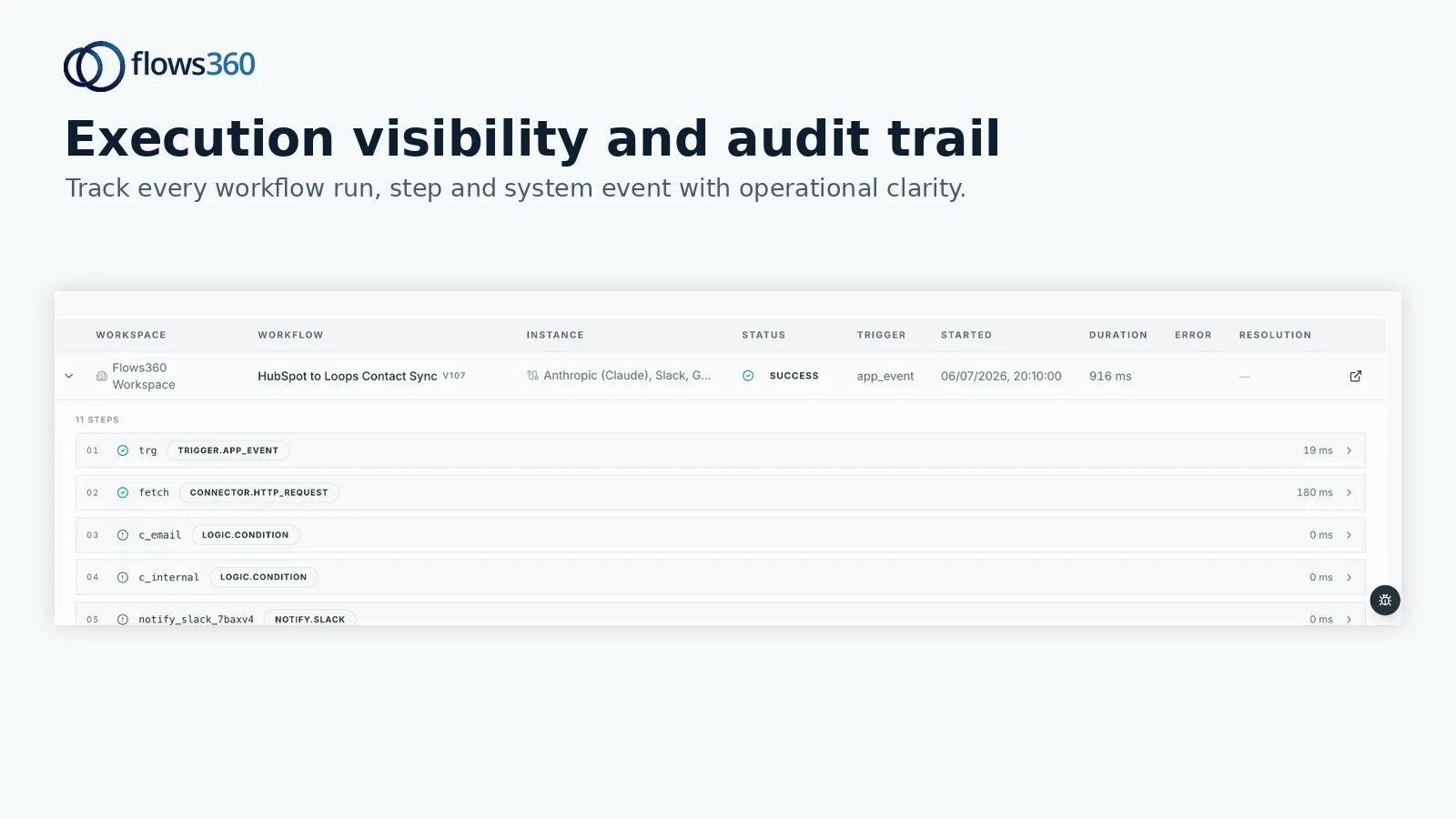
The best teams use platforms like Flows360 to orchestrate customer success workflows across their entire tech stack, creating deterministic processes that trigger the right action at the right time. Health scores update automatically. Expansion opportunities surface without manual review. At-risk accounts generate immediate alerts. Your team gets back time to do what they actually should be doing: building relationships and driving outcomes.
See where your workflows are leaking time?
This isn’t about replacing your customer success software. It’s about making your existing tools actually talk to each other so data drives decisions instead of being siloed in separate systems.
Key Metrics That Matter
You can’t improve what you don’t measure. Effective customer success teams track:
- Net Retention Rate (NRR) – The gold standard. Include expansion revenue, not just retention. Target: 110%+.
- Customer Health Score – A weighted composite of adoption, engagement, support sentiment, and usage trends. Update it weekly.
- Time to Value (TTV) – How quickly does a customer achieve their first meaningful outcome? Shorter is better.
- Feature Adoption Rate – Are customers using the features that deliver their promised ROI? If not, why not?
- Churn Risk Rate – What percentage of your base shows warning signs? Track this weekly, not quarterly.
- Customer Effort Score (CES) – How easily can customers achieve their goals with your product? Easier = longer relationships.
- Expansion Revenue per Customer – Modern success isn’t just preventing churn. It’s driving growth within the existing base.
Pick 3-4 metrics that matter most to your business, track them obsessively, and tie team compensation to them. Everything else is noise.
Proactive Engagement in Practice
Here’s what separates high-performing teams from the rest: they’re not waiting for problems to surface.
Proactive customer success means:
- Identifying at-risk accounts by monitoring engagement trends (not waiting for them to request cancellation)
- Sharing industry benchmarks and use case playbooks specific to their vertical and company size
- Running quarterly business reviews that focus on their outcomes, not your features
- Scheduling quarterly training on advanced features tied to their expansion goals
- Creating peer groups where similar customers learn from each other
The automation angle: you can’t do this manually at scale. You need workflows that automatically trigger contextual education based on customer behavior. When a customer completes onboarding, a personalized advanced training sequence starts. When adoption metrics dip, your team gets alerted. When expansion signals appear in the data, a playbook kicks in.
That’s where infrastructure matters. If your customer success data lives in isolation, you’re fighting friction every single day. If your tools are connected, insights become action.
Building Your Customer Success Foundation
If you’re building or scaling a customer success function, start here:
1. Document your success criteria by customer segment. Don’t generalize. A mid-market customer’s path to value looks different from an enterprise customer’s. Map it explicitly.
2. Define your engagement cadence. How often will you touch each customer segment? What does proactive engagement look like for you? Schedule it. Make it repeatable.
3. Audit your tool ecosystem. Which systems hold customer health data? Adoption metrics? Support tickets? Billing information? Start connecting them so information flows automatically.
4. Choose metrics and track them relentlessly. Pick the 3-4 metrics that directly tie to your business outcomes. Review them weekly with your team.
5. Identify opportunities to automate the mechanical work. Where is your team spending time on data consolidation instead of customer engagement? That’s your automation target.
Building this foundation takes deliberate effort, but it compounds. Six months in, your team is more proactive, your metrics are trending up, and churn becomes predictable rather than a surprise.
Why Automation Accelerates Best Practices

Here’s the honest conversation. Customer success methodology isn’t new. The frameworks exist. What separates winners from the rest is execution consistency.
Consistency requires automation. Not the “replace humans with robots” kind. The “remove friction so your team can execute the methodology every single time” kind.
When you’re manually aggregating data, merging spreadsheets, and cross-referencing systems, your best practices decay. You miss the QBR because you’re still compiling the data. You skip the quarterly training because your team is drowning in support tickets. You miss churn signals because they’re scattered across five platforms.
But when your customer success workflows are connected and automated? Your team executes the methodology at scale. Proactive engagement becomes the default, not the exception. Data drives decisions because insights are automated and real-time.
Related: Best Platform for Customer Success Data Orchestration Across Systems
That’s why leading teams use platforms like Flows360 to govern and orchestrate their customer success processes. Not to replace their existing tools, but to make them work together. The result is a customer success machine that scales without proportional headcount.
Getting Started with Your Methodology
You don’t need to overhaul everything tomorrow.
Start with one thing: define what success looks like for your highest-value customer segment. Document it. Share it with that customer explicitly. Then build your engagement plan around delivering that outcome.
Once you’ve nailed the approach for one segment, replicate it. Add another segment. Identify the mechanical parts that can be automated. Connect your systems. Measure outcomes. Iterate.
Customer success methodology is about intentional execution. The teams that dominate their market aren’t smarter or working longer hours. They’re operating from a documented system that scales reliably.
If your current approach feels reactive, fragmented, or manual, that’s the signal. Your team has the talent. They need the framework and the infrastructure. That’s where methodology and modern automation come together.
Frequently Asked Questions
What’s the difference between customer success and customer support?
Customer support reacts to problems your customers surface. Customer success proactively guides customers toward their outcomes so problems don’t happen in the first place. Support answers questions. Success prevents churn and drives expansion revenue.
How often should we run business reviews with customers?
At minimum, quarterly for key accounts. For enterprise or high-expansion-potential customers, monthly check-ins are standard. The content should shift from troubleshooting to strategy. Focus on their outcomes, not your features. If you have 100+ customers, automate the data preparation so your team can focus on the conversation.
What should we measure if we only have one metric?
Net Retention Rate. If your existing customers are expanding, you’re winning at customer success. Everything else flows from that. NRR above 110% signals a healthy, satisfied base. Below that, something in your methodology or engagement needs adjusting.
How do we identify at-risk accounts before they churn?
Track behavioral signals: declining login frequency, feature usage dropping, support tickets increasing, attendance at QBRs declining, expansion signals disappearing. Most customers signal churn risk 60-90 days before they actually leave. If you’re monitoring these signals weekly, you have time to intervene. Automate the monitoring so your team gets immediate alerts instead of discovering it in a monthly review.
See where your workflows are leaking time?